


<img height="1" width="1" style="display:none" src="https://www.facebook.com/tr?id=643727312142648&amp;ev=PageView&amp;noscript=1">
Skip to main content
AI Mode

The State of Nonprofit Legal Immigration Service Providers in 2026

How policy shifts and funding pressure are reshaping immigration nonprofits

Get insights from a survey of the immigration nonprofit sector, interviews with nonprofit leaders, and an analysis of what it all means for the organizations doing this work.

Want a Copy You Can Share With Your Team?


A defining era for immigration nonprofits

Nonprofit organizations serving immigrant communities are doing some of the most demanding legal work in the country, under conditions that would strain any sector.

Policy shifts happen overnight. Enforcement is now the administration's top priority. Cases that were once routine now take more documentation, more time, and more emotional labor.

None of this is new to immigration nonprofits—they've operated under uncertainty for years. But the pressure has reached a new level. The organizations maintaining their footing are the ones that stopped waiting for stability and started building the capacity to withstand what's next.

This report is for nonprofit leaders trying to navigate this shift. It's also for funders, policymakers, and advocates who want to understand what's happening inside these teams beyond the headlines.

Here's what you'll find inside:

check (2) 1

An overview of the organizations doing this work

check (2) 1

The policy and funding shifts reshaping daily operations 

check (2) 1

Where capacity is most strained 

check (2) 1

How organizations are adapting infrastructures to keep pace 

check (2) 1

What the leaders on the ground are saying about this moment 

check (2) 1

Concrete steps for building resilience

About the report

At eimmigration, we work with more than 2,500 nonprofit professionals in this space. We've watched this sector weather a lot over the last 30 years, but we know the strain right now is different. 

We developed this report to better understand what nonprofit leaders are experiencing, and provide useful context for those running these organizations, funding them, or trying to understand what's at stake.

It draws on three sources.

A survey sent to nonprofit immigration legal service providers nationwide, capturing responses from organizations of varying sizes, structures, and service models.

In-depth interviews with three nonprofit leaders who spoke openly about what's happening inside their organizations right now.

Ongoing conversations with nonprofits across the country, whose day-to-day experiences shape our understanding of the pressures this sector is navigating.

A look at the landscape

Immigration nonprofits operate at the intersection of law, policy, and community support. They serve individuals and families navigating some of the most important legal processes of their lives, often without the means to afford private counsel.

These organizations don’t fit a single mold. They range from national networks with hundreds of affiliate offices to two-person programs embedded in a specific neighborhood. Each type faces distinct pressures, resources, and operational realities.

Across all types, the current picture looks similar: rising demand, constrained capacity, and teams stretched thin.

Icon-LargeNationalNetworks

Large national networks

Organizations like Catholic Legal Immigration Network, Inc. (CLINIC)—which supports a network of more than 400 Catholic and community-based immigration legal service providers across 49 states—form the infrastructure backbone of the field. They don't just deliver legal services; they train, resource, and coordinate the organizations that do. CLINIC alone supports roughly 3,000 network staff members through training, technical assistance, real-time policy updates, and best practices.

Because of their scale, national networks have greater research capacity, can better track policy shifts more closely, and can deploy resources to affiliates that couldn’t sustain those functions on their own. Their size also means they have wider advocacy reach through direct relationships with federal agencies, coalitions with peer organizations, and a public voice that can influence policy conversations.

The tradeoff is responsiveness. A national organization can't always move as quickly as a community-based team that knows its clients by name.

Icon-CommunityBasedOrganizations

Community-based organizations

This is the most common type of immigration nonprofit, and the most varied. They range from established multi-program social service agencies with dedicated legal departments to lean, single-focus programs run by a handful of staff, often serving specific ethnic or linguistic communities.

It's also the hardest category to count. The US Department of Justice formally recognizes certain nonprofit organizations through its Recognition and Accreditation (R&A) Program, currently listing 948 organizations and 2,635 accredited representatives. The state-by-state directory maintained by ImmigrationLawHelp.org captures some additional groups. But neither list is comprehensive. The many small-scale community organizations operating at the local level, some without formal accreditation, don't appear on either. The true number of immigration-serving nonprofits in the US is certainly larger than any official count suggests.

Most community-based nonprofits have small teams and budgets to match. Their funding typically includes a mix of local government contracts, private foundations, individual donors, and occasionally federal grants. That mix creates flexibility, but also fragility. The loss of one major grant can trigger immediate staffing cuts.

What community-based organizations often have that larger networks don't is deep community trust. Staff frequently speak the languages of the clients they serve, understand the local court environment, and establish long-term relationships with the communities they support. That cultural proximity often determines whether a client walks through the door at all.

Icon-SpecializedLegalCenters

Specialized legal centers

Specialized centers focus on a defined population or form of legal relief, like asylum seekers, survivors of domestic violence, detained individuals, unaccompanied minors, or some combination. These organizations illustrate what's possible when a team builds deep expertise in a particular area of need.

The National Immigrant Justice Center is one example of a specialized legal center that runs a network of approximately 1,000 pro bono lawyers dedicated to asylum defense. RAICES is another, providing legal services, social services, case management, and rights advocacy for immigrant, refugee, and asylum-seeking people and families in Texas.

These niche organizations invest heavily in staff training and legal expertise within their focus areas. A team working only asylum cases from a specific country learns that country’s conditions, builds specific credibility with adjudicators, and develops court strategies that general-service providers can't easily replicate. A domestic violence-focused center establishes trauma-informed intake processes and coordinated relationships with housing and mental health providers.

That specialization is a strength. It also means scope is intentionally narrow. Most specialized centers build referral relationships with generalist providers to make sure clients get the full range of services they need.

What the work looks like

No matter the type, all of these organizations provide services for people who fall outside the reach of the private bar—clients with little or no income, limited English, and often limited trust in institutions. The core legal services these organizations offer include:

  • Asylum applications and representation
  • Naturalization and citizenship applications
  • Family-based visa petitions
  • Temporary Protected Status (TPS) applications
  • Waivers of inadmissibility
  • Legal services for detainees
  • Representation for unaccompanied minors

Even though legal representation is the foundation of nonprofit service models, it's rarely their only service line. 

Many clients who walk through the door of an immigration nonprofit are dealing with more than legal problems. They're often navigating housing instability, language barriers, trauma, and the practical challenges of building a life in a country that may not feel welcoming.

Knowing this, most nonprofits have expanded well beyond direct legal services to include various wraparound services.

Icon-CommunityEducation
Community education programs

Helping clients and their families understand their legal rights and recognize scams or bad actors before a legal problem starts

Icon-SocialServiceReferral
Housing and social service referrals

Connecting clients to housing assistance, food security programs, and other social services that their stability depends on

Icon-MentalHealthSupport
Mental health support partnerships

Giving clients access to trauma-informed counseling through partnerships with local providers who understand the immigration process

Icon-Advocacy
Advocacy and community organizing

Pushing for policy change at the local, state, or federal level and mobilizing communities around issues affecting their neighborhoods

The pressures are mounting

Immigration nonprofits have always operated in uncertain conditions. Policy changes, funding shifts, and fluctuating demand aren't new. What's different now is that the pressures organizations once absorbed one at a time are arriving all at once.

A single policy change can complicate casework, cut off a funding stream, and drive a surge in urgent cases within the same news cycle. That's what's actually straining the sector—three major problems compounding on one another.

Policy is driving most of the added case complexity.

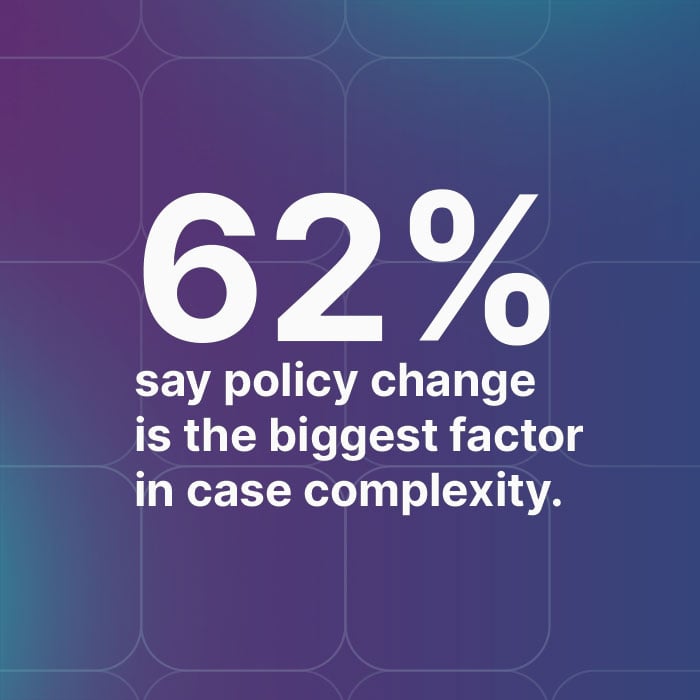
62% of organizations point to policy change alone as the biggest factor behind harder casework—more than enforcement activity and client fear combined. 

Funding has become unpredictable, not just tighter.

Grants have been cut, restored, and cut again with little warning. Only 34% of organizations feel confident about their financial outlook over the next year. 

Community demand keeps outpacing capacity.

Just 24% of organizations say they're comfortably meeting demand today, even as caseloads and case complexity keep climbing. 

Shifting policies are causing chaos

Policy decisions have flown out of Washington to land in intake queues, case files, and client conversations—often with little warning and no additional resources to absorb them.

62% of organizations point to policy change alone as the single biggest factor driving case complexity. That impact shows up in the day-to-day work.

  • Changes to parole programs and the erasure of many humanitarian protections have forced organizations to file cases they didn't anticipate, on timelines they didn't set.

  • Increased enforcement activity compounds the load further, driving surges in emergency consultations.

  • Organizations that had planned their staffing around predictable service categories have found themselves triaging urgent cases instead.

Statistic-1

As federal enforcement has increased, client anxiety has risen, demand for Know Your Rights workshops has spiked, and requests for detention representation have increased. None of it came with new funding.

Recent policy changes hitting the sector hard

Grant funding cut

Termination of the USCIS Citizenship and Integration Grant Program (2025) eliminated more than $22 million in funding across 41 states and DC. Almost immediately, staff positions were eliminated, workshops paused mid-cycle, and naturalization intake pipelines slowed immediately. 

Stricter adjudication
Stricter naturalization adjudication standards and heightened scrutiny of "good moral character" turned routine cases into complex ones. Denials and Requests for Evidence increased. Cases simply take more time and attention now.
Enforcement expansion

Expanded enforcement and detention activity has shifted demand toward removal defense, asylum representation, and habeas petitions. These cases are more time-intensive and more emotionally demanding. 

New payment burden
Electronic payment mandates and fee waiver changes added new administrative steps, particularly for organizations serving low-income clients. When this change went into effect, organizations were forced to resubmit large volumes of cases overnight.

The cumulative effect is a sector doing harder work with the same, or fewer, resources.

Anu Thomas, Executive Director of Esperanza Immigration Legal Services, describes the shift in naturalization cases directly.

"Applicants are not only expected to address past issues, but also to affirmatively prove they are 'good' individuals—that they are productive members of society. Much of this information is already captured in the application itself: employment history, education, tax compliance. Requiring additional documentation in this context feels redundant and unnecessary."

Anu Thomas

Executive Director | Esperanza Immigration Legal Services

Anu’s team is also encountering more field-level verification tactics. USCIS neighborhood checks, historically associated with marriage-based petitions, are now showing up in naturalization cases, including those involving medical waivers.

According to Anu, the team at Esperanza Immigration Legal Services now has to assume a higher level of scrutiny in every case. She's not the only one we heard this from.

Sylvia Ortiz, Deputy Director of Programs and Subcontract Administration at CHIRLA, says she's seeing the same pattern.

"Previously, certain cases that would have been considered simple and straightforward filings now require additional screening measures, disclaimers, and more evidence. We've seen higher RFEs and denials. This has significantly impacted our case workers' output."

Sylvia Ortiz

Deputy Director of Programs and Subcontract Administration | CHIRLA

Even modest shifts have a ripple effect. Grants don't restart overnight. Staff can't be rehired instantly. Clients whose cases stalled may have lost eligibility, or simply lost hope.

Funding instability is a growing threat

Funding instability traces directly back to policy. The USCIS grant termination is only the most visible example.

Despite legal aid's proven cost-effectiveness, federal funding faces renewed risk in multiple regions. Recent warnings from the California State Bar show just how exposed civil legal aid remains to federal decisions. In California alone, hundreds of millions of dollars in legal aid funding support immigration assistance and related services. Significant cuts would weaken access to legal help across large parts of the state, particularly for low-income communities and rural areas.

Some states have moved to fill the gap. In New York’s most recent budget, lawmakers allocated more than $60 million for immigration legal services. It was a welcome investment, but advocacy groups noted that it fell far short of what was needed.

Statistic-2 (1)

There's a quieter story in the philanthropic data worth noting. While federal funding has dropped sharply for many organizations, foundation and individual donor support have moved in the opposite direction.

Roughly a quarter of survey respondents reported increases in philanthropic support of 5% or more over the past year. Some saw upwards of a 50% increase in funding from this channel.

This shift doesn’t come close to offsetting federal losses at scale. But it does suggest that private funders are responding to the moment in ways public funding has not.

For nonprofits, the real problem isn’t just about the amount of funding. It's the lack of predictability. Uncertain or short-term funding makes it harder to plan staffing with confidence, commit to longer-term service models, or absorb unexpected surges in demand.

That uncertainty shows up clearly in the data.

Concerned

46%

 say they're concerned about funding stability. 

Uncertain
26%

are uncertain about the state of their funding.

Confident

11%

only are very confident in their financial outlook.

Anu affirmed how hard funding cuts have hit organizations in her network. 

 "Federal funding for naturalization was eviscerated. It hit the larger orgs that were invested in federal funding more than it hit us, though we did lose a subgrant for this work. Some of my peer agencies lost 60, 70, or 80% of funding for their entire agency. We're seeing incredible losses, which means services are decimated and a lot of talent is leaving the nonprofit space." 

Anu Thomas

Executive Director | Esperanza Immigration Legal Services

Other organizations are outright choosing not to accept federal funding under the current administration because the dollars come with contingencies that ultimately put their community members at risk. Some grants now require organizations to verify immigration status before they can provide workforce training, mental health support, or disaster recovery services to community members.

The gap between demand and capacity

Policy shifts and funding instability compound and show up in capacity.

The available numbers look deceptively stable. The DOJ Recognition and Accreditation list grew from 909 organizations at the end of 2024 to 948 today. But that doesn't account for organizations that have quietly reduced services or shut down. Nor does it reflect the staffing cuts, reduced hours, and narrowed case scope happening inside organizations that are still standing.

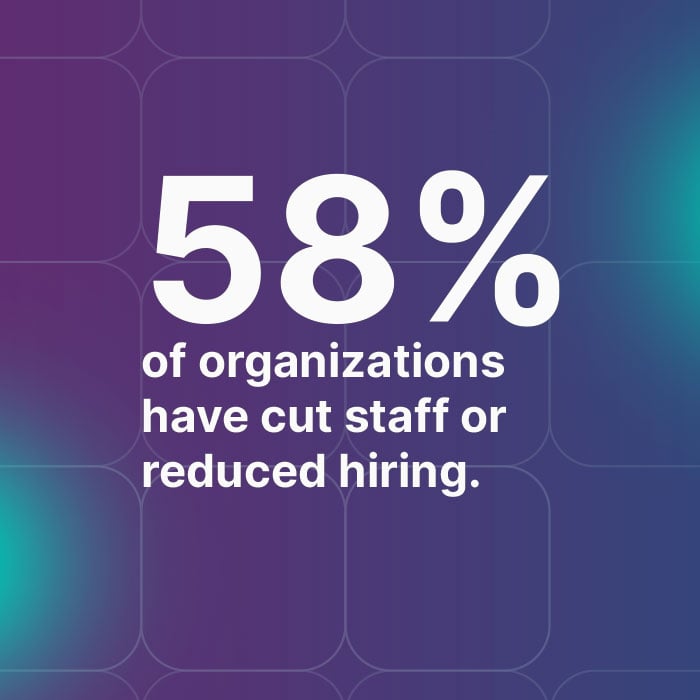
Staffing is the most immediate and consequential impact of financial instability. 58% of survey respondents say funding uncertainty has already affected their hiring or staffing levels.

Statistic-3

How these shifts have affected demand, on the other hand, is more complicated than "it's rising."

In some communities, demand has grown sharply, driven by enforcement activity and the urgency of expiring protections. In others, something subtler is happening. Need is high, but clients aren't pursuing legal status. Fear is keeping people away.

"Existing forms of relief have disappeared, leaving community members to ask, 'What next?' Communities feel the door to get in is closing on them. So a lot of folks are choosing to not walk in at all." 

Anu Thomas

Executive Director | Esperanza Immigration Legal Services

This is one of the least visible strains on the sector. Organizations are managing more clients while also navigating the reality that many people who need help aren't seeking it. The gap between need and utilization is as much a product of fear as it is of capacity.

For the clients who are showing up, the work is harder than it used to be.

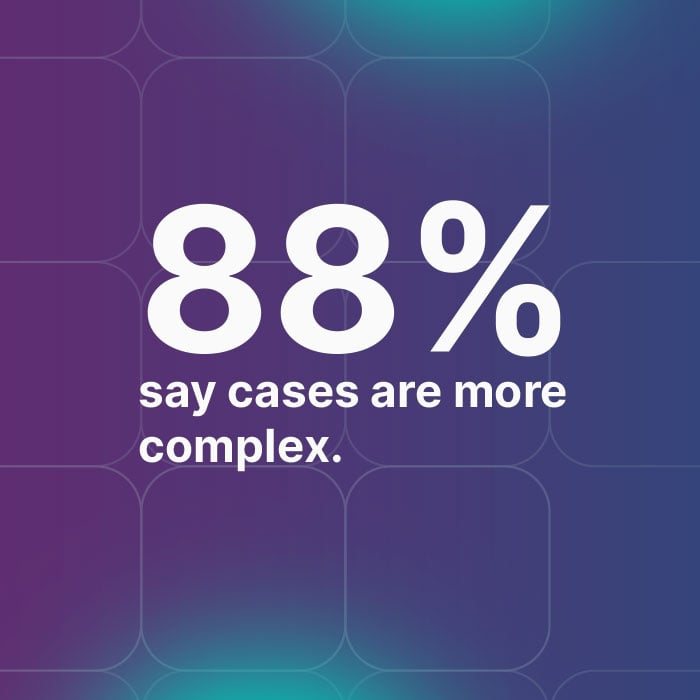
88% of survey respondents say cases have become more complex over the past 18 months. More than half describe the increase as significant.

What was once a two-hour naturalization preparation now often involves FOIA requests, tax records, and state-level documentation. Language barriers further complicate the picture.

Beltrand Arellano, DOJ Accredited Representative at the Immigration Institute of the Bay Area, described how this plays out in practice.

Statistic-4

"There's a growing Mam-speaking community here. We've had to adapt, but we don't have the resources for Mam interpreting. Most of these clients are in removal defense or asylum, and we don't have the resources to meet this demand."

Beltrand Arellano

DOJ Accredited Representative | Immigration Institute of the Bay Area

Detention cases put that same strain under even more pressure. US Immigration and Customs Enforcement is detaining more people than ever. Roughly 60,000 people are currently held in ICE detention centers across the country, and those without legal representation face a steep disadvantage.

The stakes here are different from most other case types. People are held in facilities where safety risks are real and conditions are often inhumane, and the cost of a missed deadline can radically alter someone's life. Every detained client without representation is another instance of the same gap— capacity that's unable to keep pace with need.

That gap is the bottom line. Only 24% of survey respondents say they're comfortably meeting demand. Many are delaying intake or turning clients away entirely.

Building for resilience

"Doing more with less" is a phrase most nonprofit leaders have heard so many times that it's lost meaning. And in the current environment, it sets the wrong expectation.

Nonprofits shouldn’t have to squeeze more output from already-stretched teams. They need to remove the friction that's getting in the way of the work that actually matters.

When survey respondents were asked what would make the biggest difference to their capacity right now, 75% said more funding.

That’s no surprise. But the second answer was:

Faster case processing, cited by 53% 

Reduced data entry came in at 32% 

Easier reporting for funders at 30% 

Better staff onboarding at 28% 

Infographic (1)

 These responses all point to solvable operational problems. 

Technology closes the gap

What's interesting though is that 46% of survey respondents say they don't have time to implement and train on new systems. That's the paradox.

The organizations that would benefit most from better infrastructure are often the least positioned to adopt it.

But when demand keeps climbing and staffing stays flat, the right technology enables organizations to protect their ability to serve and get more out of every hour a caseworker has.

For immigration nonprofits, that shows up in five practical ways that combine to free up hours of administrative labor that can be rerouted directly to clients. 

Icon-OnePlaceForEverything

One place for everything

Case and client management

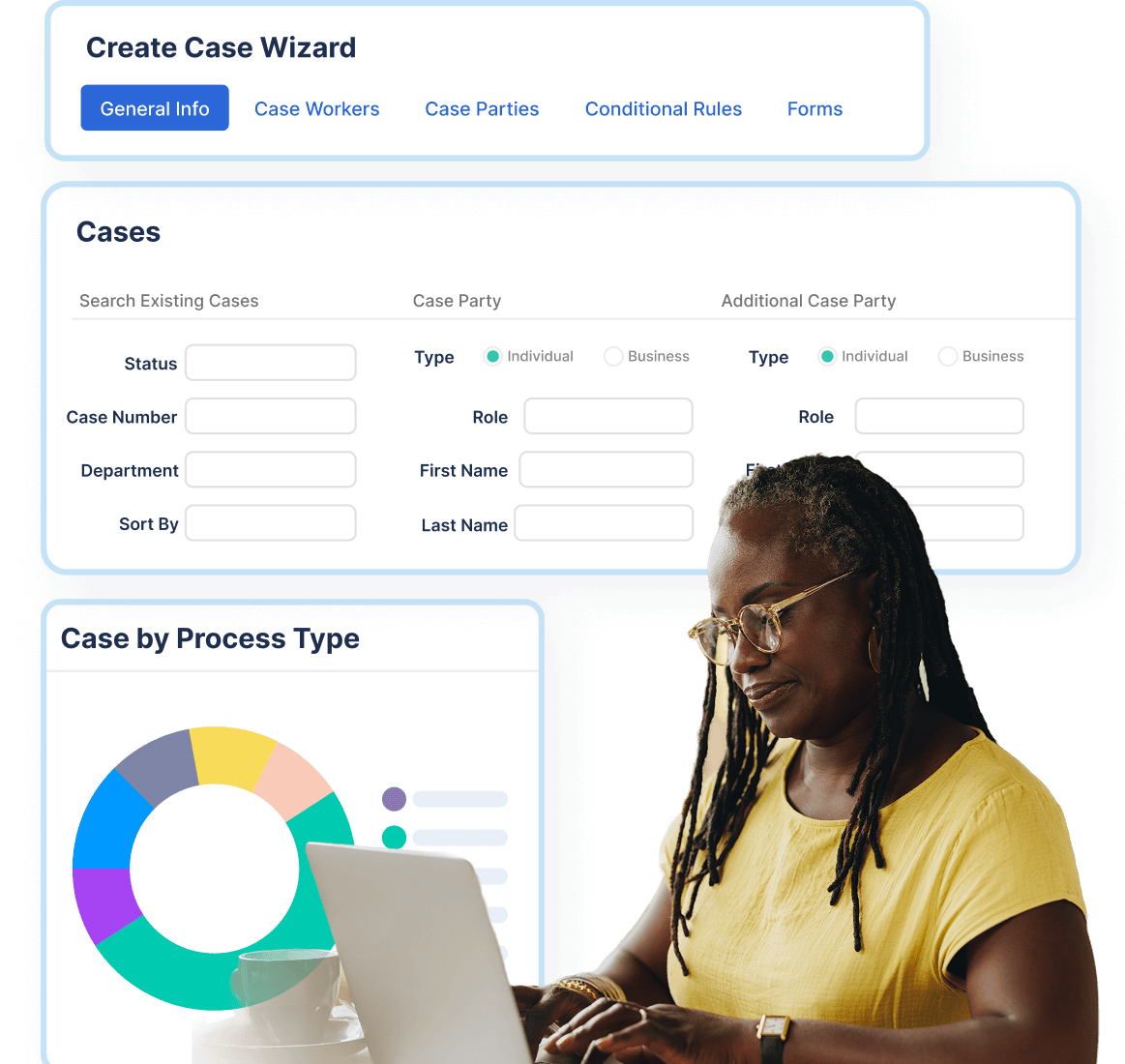
When cases, clients, forms, and documents live in one system, teams can respond faster. No scrambling across spreadsheets and shared drives, version confusion, or dropped details. 

Icon-WorkflowsRunThemselves

Workflows the run themselves

Process standardization and automation

With 100+ immigration-specific case processes and built-in automation, consistent case handling doesn't depend on whoever holds the most institutional knowledge.

New staff get up to speed faster. Experienced staff stay focused on the work only they can do.

Icon-ClientsWhoKnow

Clients who know what's happening

Centralized communication and case tracking

Enforcement activity and policy shifts make clients anxious. Centralized communication tools and automated case status updates keep clients informed, reduce repeat inquiries, and free staff from fielding calls that a good system handles automatically.

Icon-ReportingDoesntEatWeek

Reporting that doesn't eat your week

Outcome tracking and grant reporting

Grant funders need data. Compliance requires documentation. When outcome tracking and demographic reporting are built into daily workflows, reporting is reliable and quick.

Icon-Details

Deadlines that don't get missed

Task management and deadline tracking

Late filings aren’t an option in immigration law. Automated deadline tracking and task management keep cases moving, even when caseloads are high and bandwidth is stretched.

Want to see how eimmigration helps nonprofits close the capacity gap?

See how centralized case management, automation, and reporting give time back to teams that are stretched thin.

Coordination as infrastructure

Resilience is about more than just improving efficiency within a single organization. It's about strengthening the networks that make this work possible in the first place.

The leaders we spoke with were consistent on one point. Coordination is essential to surviving this shift. The organizations holding steady are the ones:

Forging trusted relationships with peer organizations

Sharing templates and workaround strategies

And creating clear referral pathways so clients don't fall through the gaps

When a policy change suddenly results in a new documentation requirement, a connected sector can figure out the response faster than any single organization can alone. In high-demand areas like removal defense and asylum, coordination can determine whether a client gets served at all. If one organization hits capacity, a strong network means the client gets a warm handoff rather than a dead end.

The current political environment is accelerating the need for organizations to work together. As federal infrastructure continues to contract, the informal networks between nonprofits, law schools, pro bono attorneys, and community-based organizations are becoming more important.

What leaders can focus on next

The pressures described in this report aren't going away. There’s no easy fix for policy or funding.

But organizations can control where they draw boundaries, what they build, and who they lean on. The nonprofits holding up best right now have made deliberate choices in each of those areas, not just absorbed more pressure and hoped it would pass.

Here's what's working that can serve as a clear guide for others.

Continue showing up

It’s arguably harder than ever to run an immigration legal service nonprofit. Demand is rising in some communities and being suppressed by fear in others. Cases are more complex. Funding is less predictable. The infrastructure organizations built over the years leading up to this administration is straining.

And the folks working in these nonprofits keep showing up because the stakes are too high to do otherwise. The clients walking through their doors—or those choosing not to, out of fear—have nowhere else to go.

The level of need isn't likely to change any time soon. But organizations can become more equipped to meet it: better systems, stronger networks, funding that reflects the true cost of this work, and a sector that sees its collective capacity as something worth protecting and investing in.

Anu Thomas has spent her entire career in this work and she said it best.

Screenshot 2025-05-15 213306

"We are all standing on the shoulders of giants. We are all shoulder to shoulder. This actually cannot move forward without everybody—from the law schools and the private bar to the nonprofits and CBOs—working together."

Anu Thomas

Executive Director | Esperanza Immigration Legal Services

Screenshot 2025-05-15 213306


Ready to strengthen your organization's infrastructure?

See how eimmigration supports immigration  nonprofits.

Group 240